
Search is no longer just about links and rankings.
Today, users expect direct answers, rich results, and instant clarity. With the rise of AI-driven search experiences, the way content is discovered—and presented—has fundamentally changed.
In this evolving landscape, simply creating content is not enough.
How your content is understood by search engines now matters just as much as the content itself.
This is where Schema Markup becomes a true marketing advantage.
The Shift from Traditional Search to AI-Driven Discovery
Search engines like Google are no longer just indexing pages—they are interpreting context, intent, and meaning.
AI-powered features such as:
- Featured snippets
- Rich results
- Voice search responses
- AI-generated summaries
are reshaping how users interact with search.
Instead of browsing multiple links, users increasingly rely on structured, summarized information.
For marketers, this creates a new challenge:
How do you ensure your content is not just indexed—but selected?
What Role Does Schema Markup Play?
Schema Markup, based on standards from Schema.org, helps search engines understand the structure and meaning of your content.
But in the context of AI search, its role becomes much more strategic.
It acts as a clarity layer—making it easier for algorithms to:
- Interpret your content accurately
- Extract key information
- Present it in enhanced formats
In simple terms:
Schema helps your content speak the language of search engines.
Why Schema Markup is a Marketing Advantage Today
1. Increased Visibility Beyond Rankings

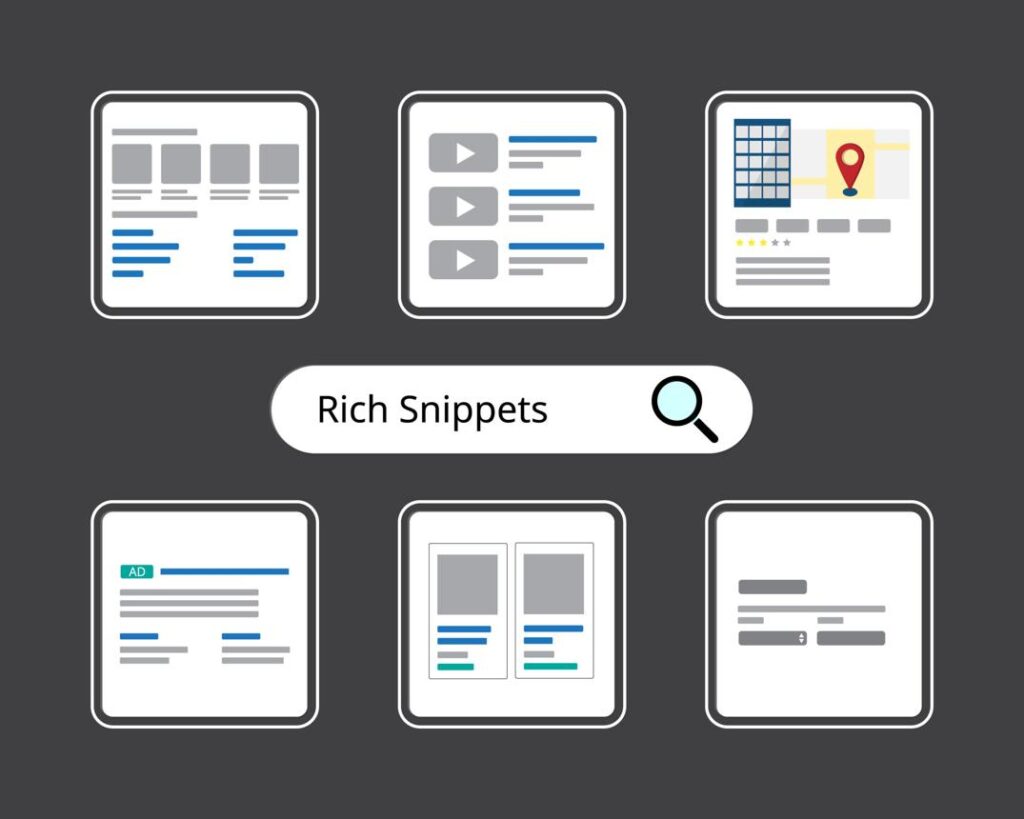

In modern search, visibility is no longer limited to blue links.
Schema enables your content to appear in:
- Rich snippets
- FAQ expansions
- Featured answer boxes
This increases your presence—even without ranking #1.
2. Higher Click-Through Rates (CTR)
Enhanced search results naturally attract more attention.
When users see:
- Ratings
- FAQs
- Structured answers
they are more likely to click.
This makes Schema not just a technical tool—but a conversion driver.
3. Stronger Brand Trust & Authority
Structured data allows your content to appear more complete and credible.
Elements like reviews, business details, and author information build immediate trust.
In a competitive search environment, trust often determines the click.
4. Better Alignment with AI & Voice Search
AI systems rely heavily on structured data to generate responses.
Schema increases your chances of being:
- Featured in voice search
- Included in AI-generated answers
- Highlighted in zero-click results
This positions your brand where decisions are made—not just where searches happen.
Key Schema Types That Drive Marketing Results
To leverage Schema effectively, focus on high-impact types:
FAQ Schema
Improves engagement and expands your search presence.
Product Schema
Enhances purchase intent with price, availability, and reviews.
Review Schema
Builds trust through visible ratings.
Local Business Schema
Strengthens local visibility and lead generation.
Article Schema
Improves content discoverability and credibility.
Each of these contributes directly to marketing outcomes—not just technical optimization.
How to Use Schema Strategically (Not Just Technically)
Many businesses treat Schema as a one-time setup.
That’s a missed opportunity.
Instead, approach it like a marketing tool:
- Align schema with your content goals
- Focus on user intent, not just markup
- Regularly update structured data
- Test and validate for accuracy
Think beyond implementation—focus on impact.
Common Mistakes to Avoid
Even with its benefits, Schema can be misused.
Avoid:
- Adding irrelevant or incorrect schema
- Ignoring validation
- Overloading pages with unnecessary markup
- Treating it as a purely technical task
Schema works best when it’s accurate, intentional, and aligned with your strategy.
Final Thoughts
Search is evolving—from indexing content to understanding it.
In this shift, the brands that win are not just the ones who create content,
but the ones who make their content easier to understand, trust, and present.
Schema Markup plays a critical role in that transformation.
It bridges the gap between your content and how search engines interpret it.
And in the age of AI search:
It’s not just about being found.
It’s about being chosen.